Cassia Bray
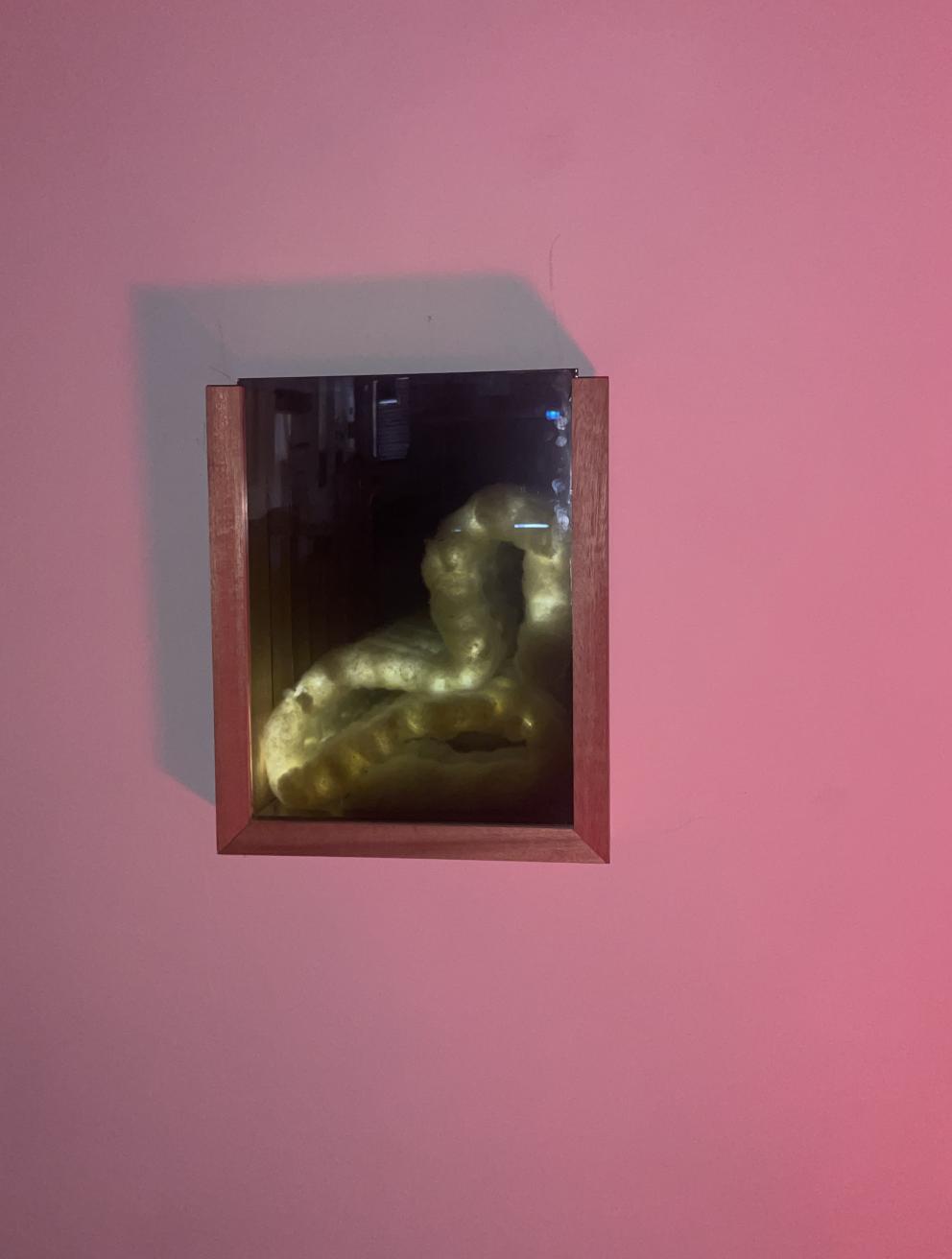
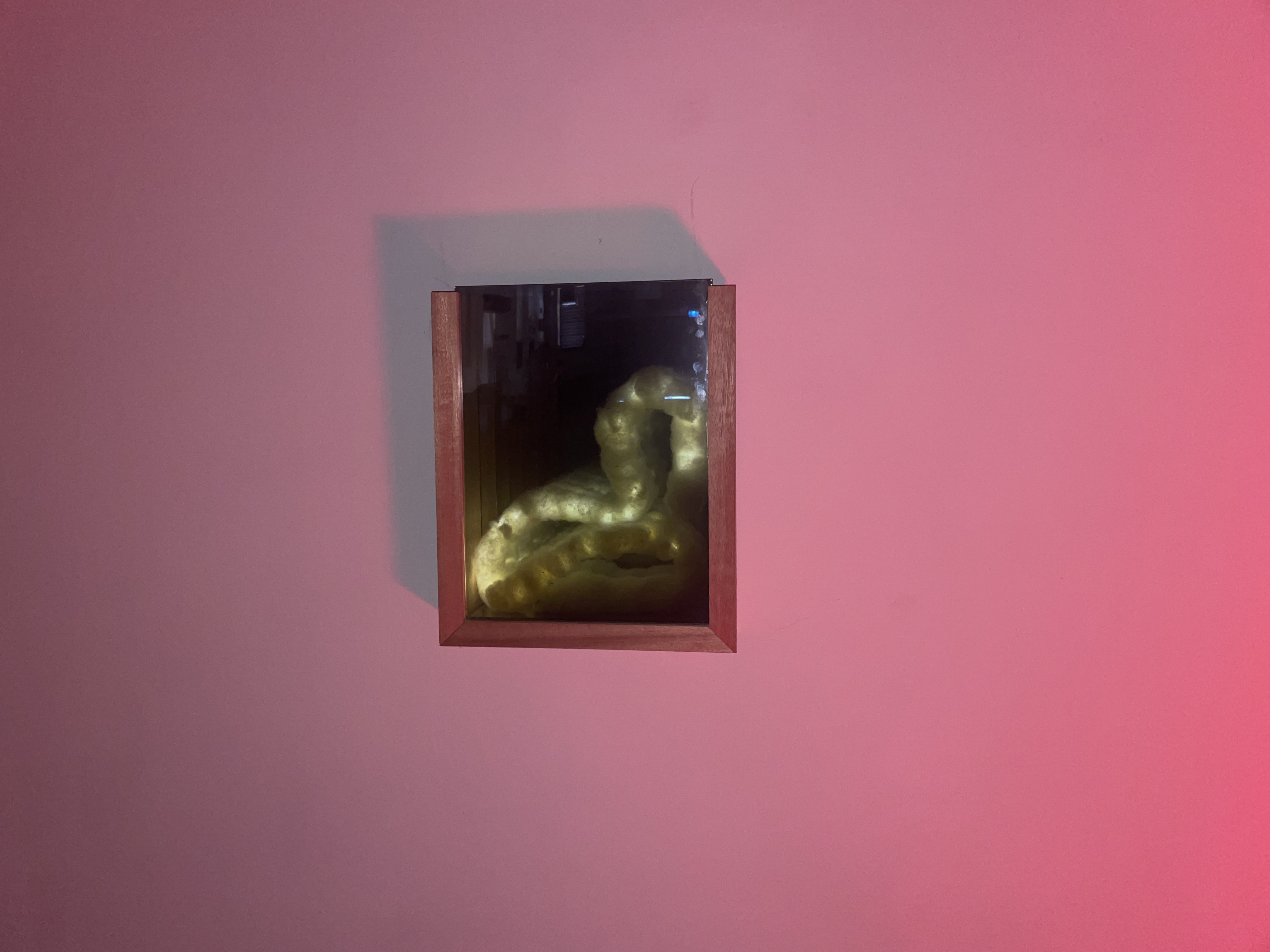
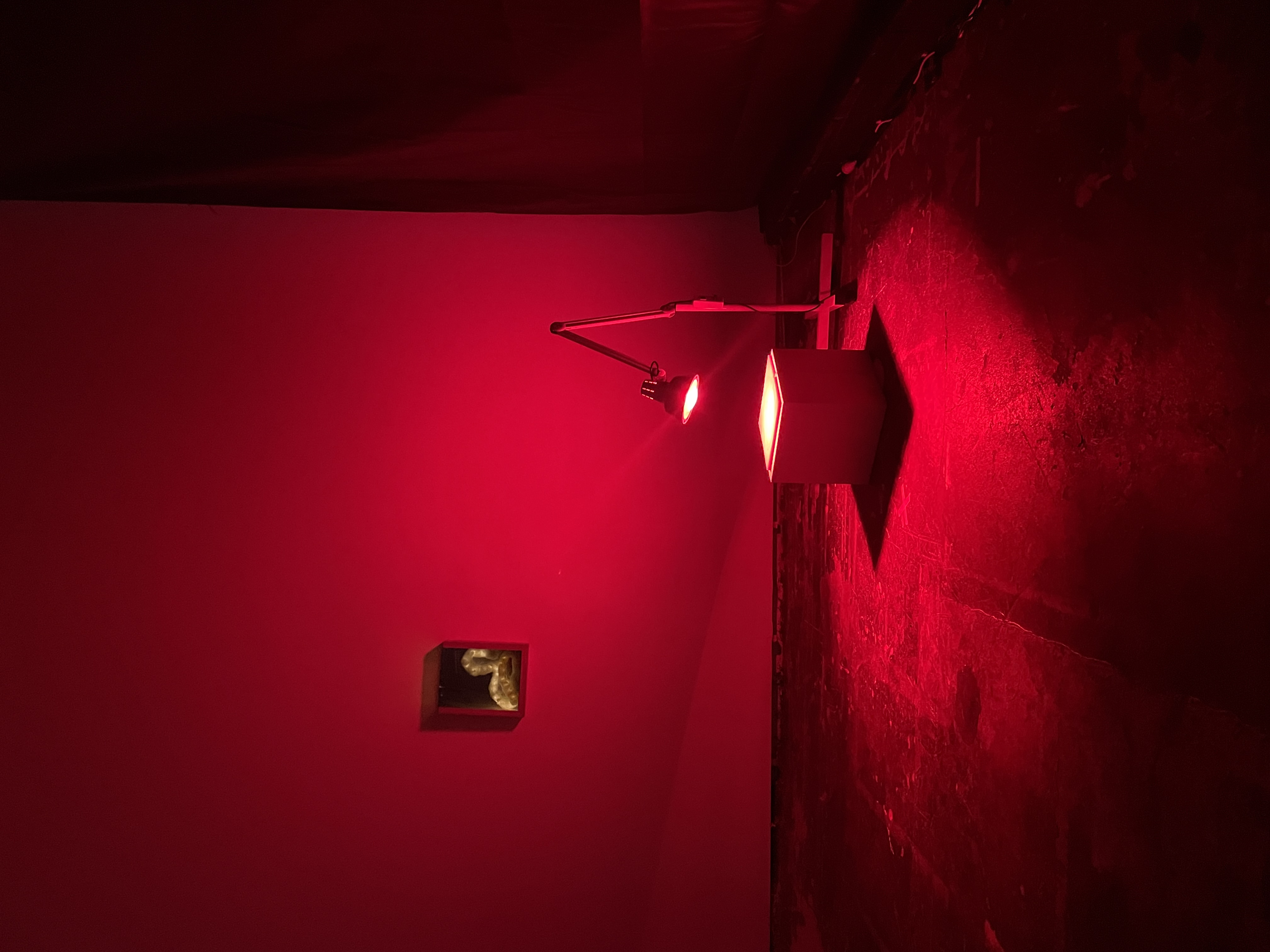
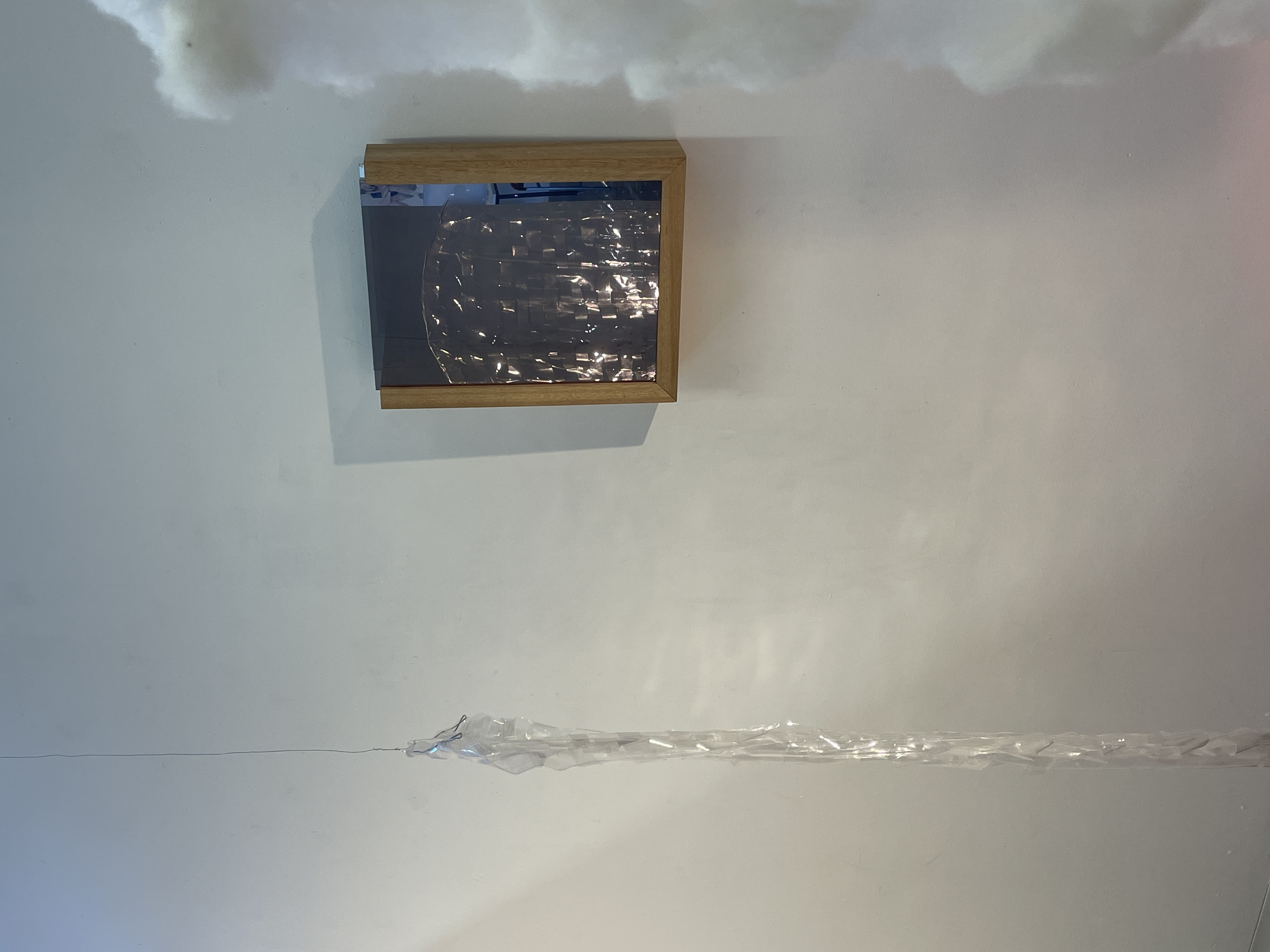
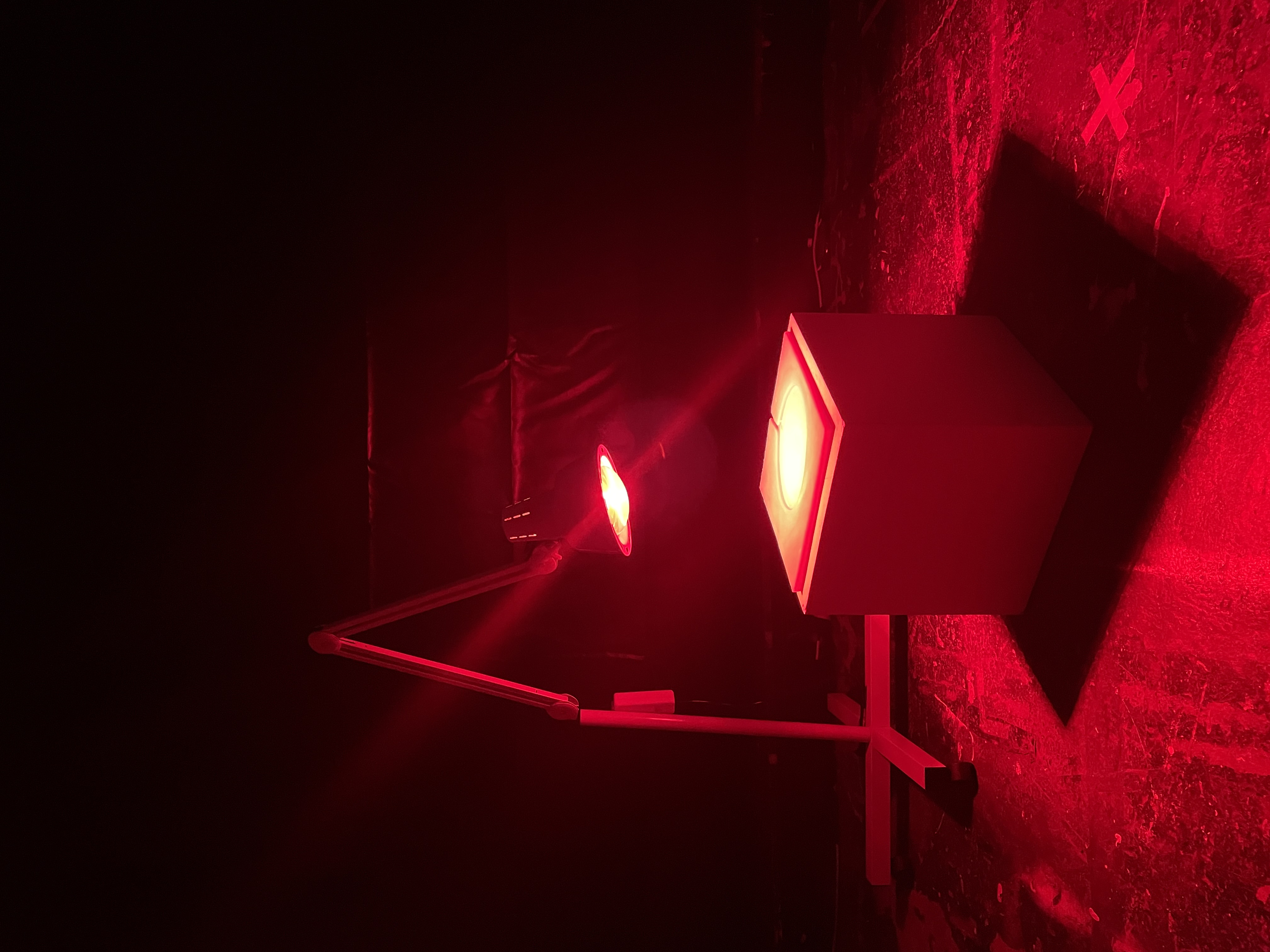
2271 Stitches to Hold my Grief, 2023
Two-way mirror film
Bray arrived at the process of crochet with the intention of engaging in an embodied ritual of connection, memory work and grief-processing and to represent the haunted body through abstraction and minimalism. Textile work is inherently associated with the body and touch due to the haptic processes it is produced by and its association with clothing. Weaving practices can also benefit the bereaved, as the time-demanding, repetitive process of weaving is both soothing and an opportunity to process loss while generating a memento of the bereaved’s love for the lost. Her use of light, shadows, and reflective and semi-transparent media connects with themes of the unseen, silence, and absence resulting in the creation of spaces that can house haunted matter. In creating these sculptures, Cassia was thinking about both those who were lost to violent history, and what it means for my body to be here now despite the efforts that were made to prevent its existence.
Cassia Bray is a descendent of troubled history. Matrilineally Jewish, her mother’s mother and grandparents escaped Nazi Germany during World War 2, some of a limited few remaining members of what was once an expansive family. Bray's father’s family is Kaytetye, survivors of the massacres, removals, missions, and the bloody brutality of colonisation. Central to her practice is the notion of haunting, as described in Gordon’s Ghostly Matter. Gordon’s haunting is a form of social alchemy in which a repressed violence makes itself known through ghosts and spectres that speak to us affectively, sensuously, and magically when the troubles they represent are no longer adequately contained. Cassia work focuses on the body as a site of deep holding and haunting while weaving together scraps and traces to explore experiences of intergenerational trauma and displacement from an in-between, autoethnographic, and feminist standpoint.